|
Facade

Structural Glazing
The glass units are bonded with a high-strength, elastic silicone adhesive to the metal frame. The dynamic loads, in mechanically unsupported systems also the static loads, are transmitted through the silicone adhesives. High-modulus Sikasil® SG silicone adhesive sealants offer the best properties for this purpose.
|
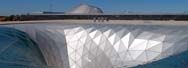
Weather Sealing
Sealants and adhesives which come into contact with each other and with many other materials require products compatible with all substrates and ancillary products. Sika supplies sealants for all kinds of sealing applications, including non-staining sealant for natural stone facades and sealant for self-cleaning glass.
|
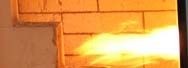
Fire-Retardant Sealing
The integrity of the joints is inevitable and gives fire brigades a chance to rescue people. Sika offers 4 hours fire-rated sealants both for vertical joints in facades and for horizontal floor joints between facade and floor slab.
|
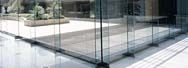
Glass-To-Glass Constuctions
For glass-to-glass applications (fin glazing, total vision glazing) Sika offers various Sikasil silicone sealants, from low modulus sealant to high modulus adhesive.
|
Water/Vapour Proofing
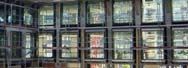
SikaMembran EPDM facade membrane system is used for movement/connection joints and perimeter sealing around curtain wall facades and window frames. Special type is available for second level barrier in capped curtain wall systems. SikaMembran system consists of various types of membranes with optimized levels of vapor diffusion for all climatic conditions. For special constructions SikaMembran sheet membranes can be combined with wet sealants (Sikaflex PU or Sikasil Silicones). For correct choice of material combinations see PDS or consult Sika FFI Competence Centre.
|
Glass Wall Grouting
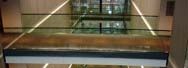
In total vision glazing (TVG, fin glazing) and glass balustrades the glass panes must be fixed to the floor with low punctual stress transfer to the glass. The bottom glass edge is embedded in the floor with self-levelling PU grout. This gives uniform stress distribution and minimal peak stress.
|
Laminar Glass Bonding
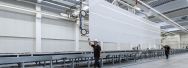
Utilizing laminar glass bonding application allows the use of glass in overhead situations as well as in vertical details, e.g. spandrels and glass walls, without any visible mechanical fixings, thus creating a large even opaque glass surface.
|
Rainscreen Cladding
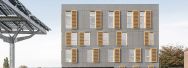
Good architecture is the key element for an aesthetically beautiful building that also includes modern living comfort, demand on energy saving and finally a sustainable investment. The facade should be the defining element of a well-designed building. When it comes to ventilated facades, Sika has an adhesive system which can exactly meet the requirements described above. For this, the panel can fully develop its original beauty.
|
Sound Damping
With SikaDamp® Sika provides an easy-to-apply solution to reduce structure-borne vibrations or external impacts (rain drops and hail grains) on thin metal and composite panels in curtain wall spandrel areas or fully cladded rainscreen walls.
|

Ancillary Products
Agents for an appropriate surface pretreatment and mixer maintenance.
|
|
Windows
Plastic Windows
Structural glass bonding in plastic windows makes the windows stiffer and increases productivity. Bonding improves the dimensional stability of the windows, even without steel reinforcement. With bonding technology, the design is no longer determined by the size of the steel reinforcement. Delicate frame structures for maximum sash frame sizes are possible. Sash frame heights of more than 2.5 m and weights up to 130 kg are possible without steel reinforcement. Permanent bonding of the glass and frame prevents settling of the window sash. On-site adjustment of the sash frames is not necessary. This saves money and increases utility. Reduced frame dimensions mean more glass, more light, and better thermal insulation. Conventional blocking in plastic windows is manual work. Automated glazing is possible with bonding technology. Automated glazing and minimal use of steel increase productivity.
|

Wood/Wood-Aluminium
Structural glass bonding makes wood–aluminium windows competitive. For many decades, wooden windows have been losing market share to plastic windows. Long-term use of wooden windows incurs high maintenance costs. Periodic painting is necessary to protect the windows against rotting. Exterior aluminium shells provide natural weather protection, which explains the increasing popularity of wood–aluminium windows. They have higher costs than plastic or wooden windows. Consequently, wood–aluminium windows are designated as premium windows. In wooden windows, bonding technology utilises the glass to provide natural weather protection. The glass covers the sash frame frames and thus protects them. This saves time and material.
|
Aluminium
Structural glass bonding in aluminium windows improves insulation and reduces costs. In order to be able to provide energy savings in keeping with present and future legislation, modern aluminium windows use plastic profiles for thermal insulation. Well insulated frame structures consist of a large number of components. Increasingly stringent requirements increase the complexity and boost costs. Bonding technology in aluminium windows utilises the insulation glass for the thermal insulation of the aluminium profiles. The insulating glass, with its better insulation characteristics, covers the sash frame and thus facilitates energy-efficient aluminium windows with simplified frame structures.
|
Insulating Glass
Insulating Glass Edge Seal
igh-modulus adhesives are compulsory for long service life of IG units. Furthermore only silicones are approved as secondary seal in structural glazing facades. For windows and capped curtain wall facades PU are a good value-for-money alternative. A durable premium-quality butyl is a must in both air- and argon-filled IG units.
|
|
Solar Energy
|